
PTFE corrugated hoses are basically made by taking a straight PTFE tube, heating it up, and blow-molding it under pressure to form those classic convolutions. They’re tough against chemicals, high temperatures, and super flexible—you see them everywhere in chemical plants, pharma, and semiconductor fabs. But when it comes to bend radius, people always want it smaller for easier installation, yet pushing too hard causes real headaches.

1. To Make the Bend Radius Smaller, Design the Convolution Like This
The convolution shape is what determines how tight you can bend the hose. I’ve seen huge differences in bend radius from different manufacturers, and it all boils down to the wave design.
- Go Deeper on Convolution Depth: The taller the peak-to-valley height, the more the hose can “stretch and compress” when bending, so the bend radius drops naturally. Typically, aim for a depth of 0.25–0.35 times the OD for a big flexibility boost. But don’t overdo it—too deep and you thin out the wall during forming, leading to uneven thickness and lower burst pressure later.
- Tighter Pitch: More convolutions per unit length make the hose act more like a spring—bends smoother. I once tweaked a mold, dropping pitch from 8mm to 5.5mm, and the same hose’s bend radius went from 150mm to 95mm. Client was blown away.
- U-Shape vs. Omega Shape? U-shape is old-school: easy to mold, cheap, but bend radius tends to be larger. Omega (rounded bottom) is way more flexible—can shave 20–30% off the bend radius—but the mold is pricier, and you have to nail the temperature and pressure or you get collapsed valleys.
- Wall Thickness and OD Match For a 10mm OD with 1.5mm wall, 3mm depth gets you around 80–90mm bend radius. Thin the wall to 1.2mm and you can go smaller, but burst pressure takes a noticeable hit—we’ll cover balancing that.
A lot of folks overlook the “thermal shrinkage” in secondary forming. PTFE shrinks 1.5–3% when hot, so you have to build that into the mold design, or the convolutions distort and bend radius ends up worse.
This is where Skyjet Polymer shines: We can design custom convolution molds based on your exact application needs, precisely controlling the wave parameters to hit whatever bend radius you want—whether ultra-tight at 80mm or a balanced medium value. The best part? We only need 15 days to complete rapid prototyping! From spec confirmation to physical samples in your hands—our mature process and quick turnaround blow away the usual month-plus waits from others. You get to test and validate fast, speeding up your project timeline.
2. Is a Smaller Bend Radius Always Better?
Short answer: No.
Tight bend radius is great for cramped spaces—like squeezing through equipment mazes without extra elbows. But bend it too aggressively, and problems pile up fast:
- Inner side kinks easily, creating dead spots that restrict flow or trap material.
- Stress concentration at the valley bottoms gets brutal—repeated flexing leads to cracks quick.
- Burst pressure drops significantly, especially at higher temps (more on that below).
So yeah, super-small bend radius looks impressive on paper, but in real use it can be a pain. My rule of thumb: Unless your installation is absolutely desperate for space, don’t chase the absolute minimum. A bit of margin can double the hose life.
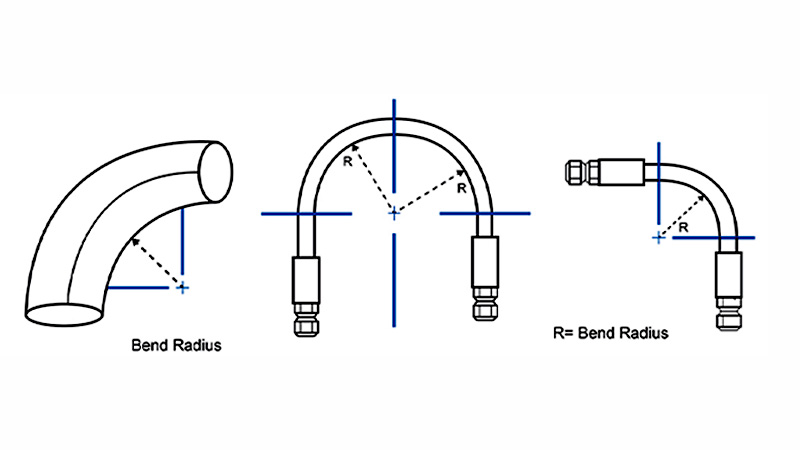
3. How to Pick the Right Bend Radius
Here’s how I usually guide customers:
- Check the setup first: Static install (fixed in place) or dynamic (moving with robots/arms)? Static can go close to the minimum; dynamic needs 1.5–2x for fatigue resistance.
- Look up the spec sheet: Every size has a recommended minimum bend radius—just use that. Example: 25mm OD corrugated PTFE is typically 200mm static, 300mm+ dynamic.
- Build in safety margin: Aim for 1.2–1.5 times the recommended value. Also, leave at least 150–200mm straight section near fittings—don’t let convolutions get crushed right at the end.
- For high temp or pressure: Loosen it up another 20%. Over 180°C or 10bar, things get unforgiving.
Got special requirements? Hit up Skyjet Polymer—we’ll custom-mold it and have prototypes in 15 days for real-world testing.
4. Does Tighter Bend Mean Lower Burst Pressure? How to Balance It
Yes, it’s a direct trade-off: smaller bend radius almost always means lower burst pressure.
Why? Bending tight stretches the outer convolutions and compresses the inner ones—stress peaks at the valleys. I tested a batch of 32mm OD, 2.0mm wall hoses:
- Straight: ~25bar burst
- 200mm radius: down to 21bar
- 120mm: 16–17bar
- 90mm: below 12bar
Crank temp to 200°C and the tight-bend ones drop to 8–9bar. Ouch.
How to strike a balance?
- Best approach: Settle on a “moderately small” radius—meets install needs without gutting pressure too much. If you could hit 90mm, I often recommend 130–150mm to keep 80%+ of the pressure.
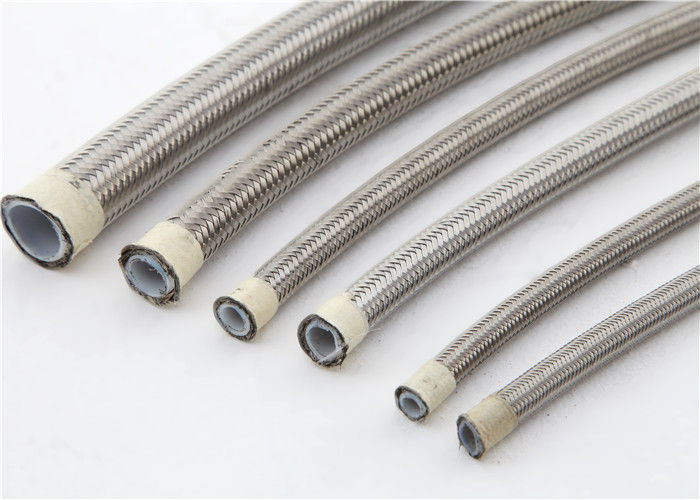
- Add Braiding: Throw on a 304/316 stainless steel braid—burst pressure doubles easily, bend radius barely changes (but adds cost and weight).
- Wave Optimization: Go for “shallow but dense” convolutions—trade a little flexibility for better pressure rating. Or add reinforcement ribs at valleys (some high-end makers do this).
- Always Test Samples: Don’t trust theory—bend to your target radius, hook up a burst tester, and see the real numbers.
Skyjet Polymer has tons of experience here: When we design your custom mold, we simulate the balance upfront, and with 15-day prototyping you can verify performance hands-on.
Bottom Line
The heart of PTFE corrugated hose design boils down to: “Bend it just enough—don’t risk everything for a pretty install.”
Deeper and tighter convolutions get you tiny bend radii easy; but long-term reliability comes from leaving margin on bend radius and protecting burst pressure. A little extra room means happier customers and fewer callbacks.
If you’ve got specific needs, reach out to Skyjet Polymer—we specialize in customs, with 15-day rapid prototyping to turn your ideal bend radius into reality fast!