
As data centers evolve to handle the demands of AI, cloud computing, and high-performance computing, liquid cooling systems have become essential for efficient heat dissipation. Unlike traditional air cooling, liquid cooling uses fluids to transfer heat away from servers, offering superior thermal management. At the heart of these systems are the tubing and hoses that transport coolants—ensuring reliability, preventing leaks, and maintaining system integrity.
In this guide, we’ll explore the various types of tubing used in liquid cooling servers, key materials, and how to select the best options for your setup. Drawing from industry expertise, we’ll also highlight how high-quality materials like FEP and PTFE corrugated tubes can elevate performance. At Skyjet Polymer, we specialize in manufacturing premium polymer solutions tailored for demanding applications, and we’ll show how our products stand out.
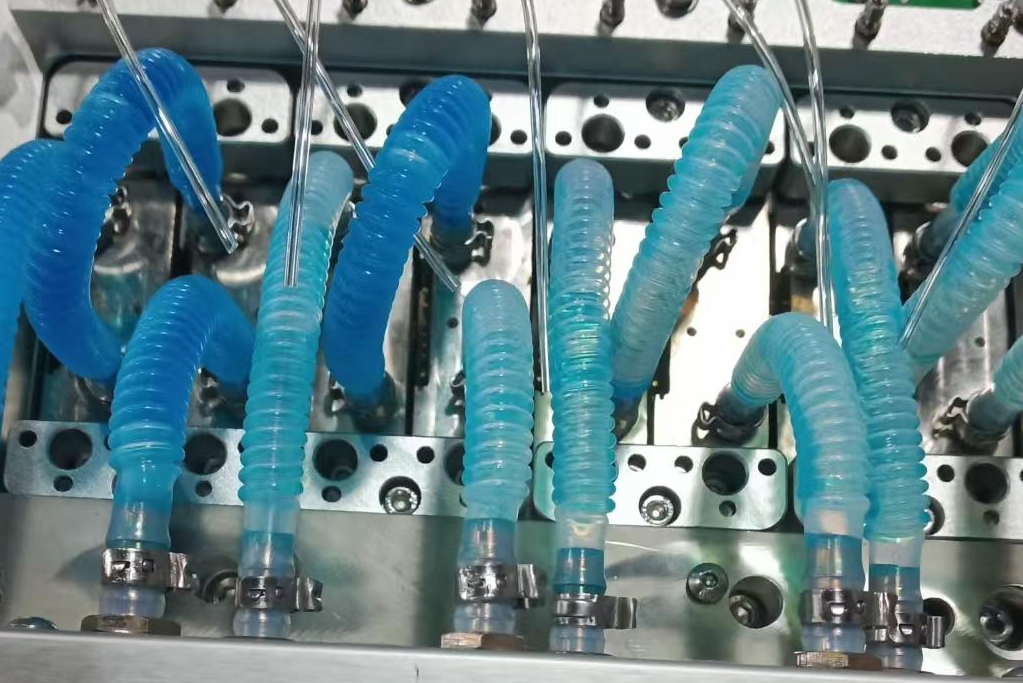
(Above: Examples of liquid cooling setups in data centers, showcasing tubing routing for efficient coolant flow.)
Understanding the Role of Tubing in Liquid Cooling Servers
Tubing in liquid cooling servers acts as the circulatory system, carrying coolants like water-glycol mixtures or dielectric fluids from reservoirs to cold plates and back. Poor tubing choices can lead to leaks, corrosion, reduced flow rates, or system failures, resulting in downtime and costly repairs.
Key considerations include:
- Flexibility and Durability: Tubing must withstand vibrations, bends, and thermal cycling.
- Chemical Compatibility: Coolants can be aggressive, so materials need to resist degradation.
- Temperature Resistance: Servers generate high heat, requiring tubing that handles temperatures up to 100°C or more.
- Flow Efficiency: Smooth inner surfaces minimize pressure drops and turbulence.
By selecting the right tubing, you can achieve better energy efficiency and longer system life—critical for modern data centers pushing power densities beyond 100kW per rack.
Types of Tubing Used in Liquid Cooling Systems
Liquid cooling servers employ several tubing types, each suited to specific roles:
- Rigid Tubing: Often made from acrylic or PETG, these provide a clean, aesthetic look in custom builds. They’re ideal for straight runs but less flexible, making them prone to cracking under stress.
- Flexible Tubing: Common in PVC or silicone, these offer easy installation and routing around components. They’re cost-effective but may degrade over time with certain coolants.
- Corrugated or Bellows Tubing: These feature a wavy exterior for enhanced flexibility without kinking, while maintaining a smooth interior for optimal flow. Perfect for tight spaces in dense server racks.
- Braided or Reinforced Tubing: Added layers protect against abrasion and high pressures, often used in industrial-scale setups.
In high-reliability environments like data centers, corrugated designs are gaining popularity for their balance of flexibility and strength.

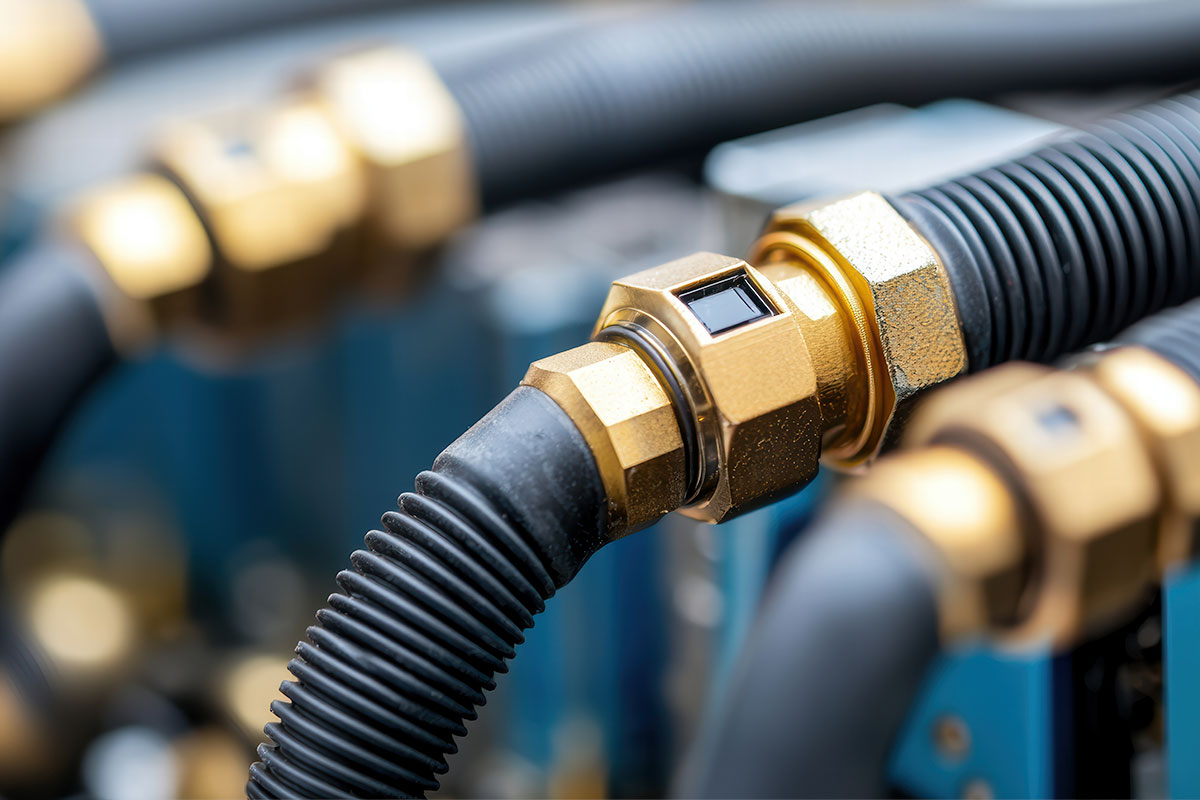

(Above: Various tubing materials and configurations used in liquid cooling, illustrating options for different server needs.)
Key Materials for Liquid Cooling Server Tubing
Material selection is pivotal, as it directly impacts performance and longevity. Here’s a breakdown of common options:
- PVC (Polyvinyl Chloride): Affordable and flexible, but limited in chemical resistance and temperature (up to 60°C). Suitable for basic setups but not ideal for aggressive coolants.
- PU (Polyurethane): Offers good abrasion resistance and flexibility, handling temperatures up to 80°C. It’s a step up from PVC but can swell with certain fluids.
- Silicone: Excellent for high temperatures (up to 200°C) and biocompatibility, but softer and more permeable, risking leaks over time.
- FEP (Fluorinated Ethylene Propylene): A fluoropolymer with outstanding chemical inertness, transparency, and temperature resistance (up to 200°C). Its low friction inner surface ensures smooth flow, making it perfect for clean, efficient cooling.
- PTFE (Polytetrafluoroethylene): Known for extreme chemical resistance and non-stick properties, PTFE handles temperatures up to 260°C. In corrugated forms, it provides unmatched flexibility without compromising durability.
Advanced fluoropolymers like FEP and PTFE are increasingly preferred in enterprise-grade liquid cooling due to their reliability in harsh conditions.
How to Select the Right Tubing Material for Your Liquid Cooling Server
Choosing tubing involves evaluating your specific setup:
- Assess Operating Conditions: Consider coolant type, temperature range, and pressure. For dielectric fluids, opt for FEP or PTFE to avoid reactions.
- Evaluate Flexibility Needs: In compact servers, corrugated tubing reduces installation time and minimizes failure points.
- Prioritize Safety and Compliance: Look for materials meeting standards like FDA or RoHS, especially in sensitive data centers.
- Factor in Cost vs. Longevity: While initial costs for fluoropolymers are higher, they reduce maintenance and extend system life, offering better ROI.
- Test for Compatibility: Always prototype with samples to ensure no degradation.
By focusing on these, you can avoid common pitfalls like coolant leaks or reduced efficiency.
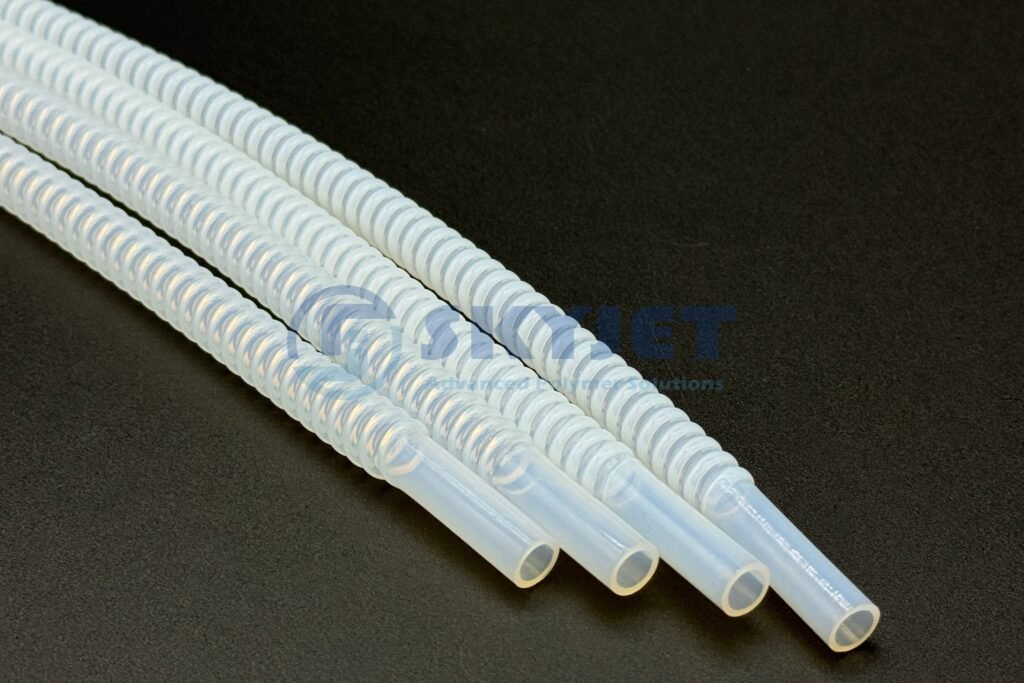
(Above: PTFE corrugated tubing examples, highlighting their use in electronic and cooling applications for smooth, reliable performance.)
Why Choose Skyjet Polymer’s FEP and PTFE Corrugated Tubing?
With over a decade in high-performance polymers, Skyjet Polymer has earned a reputation for delivering solutions that meet the rigorous demands of liquid cooling in data centers. Our FEP and PTFE corrugated tubes are engineered for superior chemical resistance, thermal stability, and flexibility—ensuring your systems run efficiently without interruptions.
What sets us apart:
- In-House Expertise: We control the entire production process, from resin selection to extrusion, guaranteeing consistent quality.
- Custom Solutions: Tailored dimensions and reinforcements to fit your exact server configurations.
- Proven Track Record: Our products have been deployed in major data centers, reducing failure rates and enhancing coolant flow.
- Commitment to Innovation: We invest in R&D to stay ahead of cooling trends, like AI-driven servers requiring advanced materials.
Customers trust us because we prioritize reliability—our tubes resist permeation, maintain low friction, and withstand extreme conditions, all while being cost-effective over the long term.
Conclusion: Optimize Your Liquid Cooling with the Right Tubing
Selecting the appropriate tubing and materials is crucial for maximizing the benefits of liquid cooling in servers. By understanding types, materials, and selection criteria, you can build systems that are efficient, reliable, and scalable.
At Skyjet Polymer, we’re dedicated to providing top-tier FEP and PTFE corrugated tubing that empowers your innovations. Ready to upgrade your data center? Contact us today for samples, quotes, or expert advice. Visit skyjetpolymer.com to learn more and explore our full range of polymer solutions.